Embarking on a career journey involves more than just showcasing your skills; it crucially includes navigating the sensitive topic of salary expectations. This comprehensive guide is designed to equip you with the knowledge and strategies needed to approach this conversation with confidence and clarity. We will delve into understanding the nuances of salary discussions, preparing your approach, timing your conversations effectively, mastering negotiation tactics, avoiding common pitfalls, and practicing your delivery to ensure you achieve fair compensation.
Understanding and articulating your worth is a fundamental aspect of professional growth. This exploration will demystify the process of discussing salary, transforming it from a potential point of anxiety into an opportunity to advocate for your value. By mastering these principles, you will be better positioned to secure a compensation package that reflects your contributions and aspirations.
Understanding Salary Expectations

Navigating the conversation around salary expectations is a crucial step in the job application process. Addressing this early can save both candidates and employers time and effort, ensuring alignment and setting a foundation for a transparent and productive relationship. Understanding your worth and the market’s perception of it is key to a successful negotiation.This section delves into the fundamental aspects of salary expectations, clarifying common misunderstandings and providing actionable strategies for research and evaluation.
By grasping these core concepts, you can approach salary discussions with confidence and achieve a compensation package that reflects your skills and experience.
The Importance of Early Salary Discussion
Discussing salary expectations at the outset of the hiring process is paramount for several reasons. It helps to gauge mutual feasibility, preventing wasted time on roles that are significantly outside your desired compensation range or the employer’s budget. Early clarification also sets a precedent for open communication and transparency, fostering trust between the candidate and the prospective employer. When salary expectations are addressed early, both parties can make informed decisions about whether to proceed, streamlining the recruitment process and ensuring that the focus remains on finding the right fit.
Common Misconceptions About Salary Expectations
Several prevalent misconceptions can hinder effective salary discussions. One common belief is that mentioning a salary expectation first will automatically lead to a lower offer. In reality, providing a well-researched range demonstrates preparedness and a realistic understanding of the market. Another misconception is that salary is solely determined by the advertised range, ignoring the impact of individual qualifications, experience, and the specific needs of the role.
Furthermore, some individuals believe that salary is non-negotiable once an offer is made, overlooking the opportunity for further discussion based on additional responsibilities or a strong counter-offer.
Researching Realistic Salary Ranges
To establish realistic salary expectations, thorough research is indispensable. This involves investigating industry standards, geographic location, and the specific responsibilities of the role.
- Online Salary Aggregators: Websites like Glassdoor, LinkedIn Salary, and Salary.com provide data based on user-submitted information and job postings. These platforms offer insights into average salaries for specific job titles in various locations.
- Industry Reports: Professional organizations and industry-specific publications often release salary surveys that offer detailed breakdowns of compensation trends within a particular field.
- Networking: Engaging with professionals in similar roles or industries can provide invaluable firsthand information about salary benchmarks and compensation structures.
- Job Postings: Analyzing salary ranges listed in similar job advertisements can offer a direct comparison point for your research.
It is important to remember that these figures are often averages, and your specific salary may fall above or below the reported range based on your unique qualifications and the employer’s specific compensation strategy.
Factors Influencing Salary Beyond Base Pay
While base salary is a primary component of compensation, several other factors significantly contribute to the overall value of a job offer. Recognizing these elements allows for a more comprehensive evaluation of a package and can provide negotiation leverage.
- Benefits Package: This includes health insurance (medical, dental, vision), retirement plans (401(k) matching), paid time off (vacation, sick days, holidays), and life insurance. A robust benefits package can offset a slightly lower base salary. For instance, a company offering a generous 401(k) match of 6% could be equivalent to a significant increase in cash compensation over time.
- Bonuses and Incentives: Performance-based bonuses, annual incentives, signing bonuses, and profit-sharing plans can substantially increase your total earnings. A potential annual bonus of 15-20% of your base salary, for example, can significantly enhance your income.
- Stock Options or Equity: For some roles, particularly in startups or tech companies, stock options or equity can represent substantial long-term financial gains.
- Professional Development: Opportunities for training, certifications, tuition reimbursement, and conference attendance contribute to your career growth and future earning potential.
- Work-Life Balance and Flexibility: While not directly monetary, flexible work arrangements, remote work options, and a healthy work-life balance can have significant personal value and impact your overall job satisfaction.
When considering a job offer, it is essential to evaluate the total compensation package, not just the base salary, to ensure it meets your financial and personal needs.
Preparing Your Salary Discussion
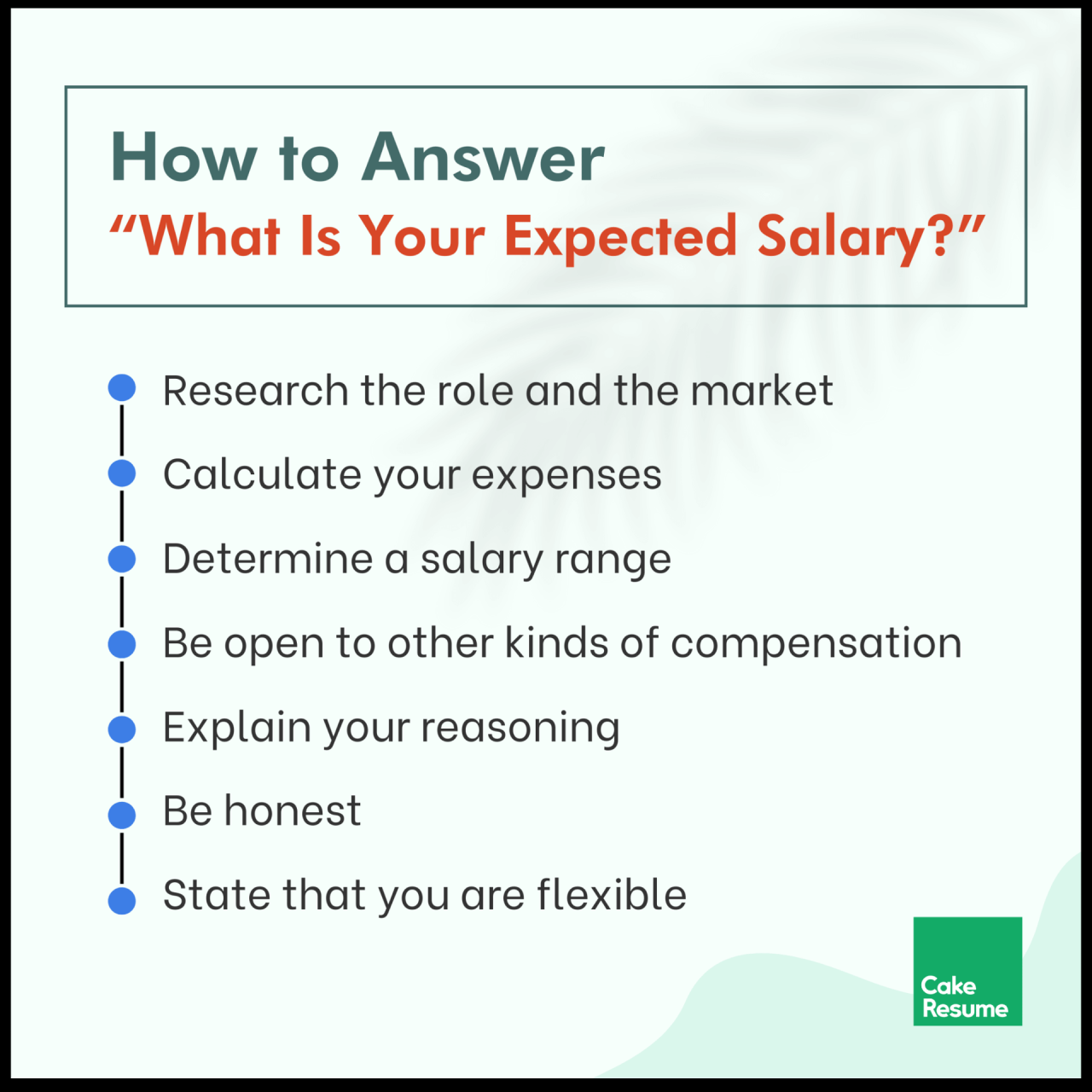
Effectively preparing for a salary discussion is crucial for achieving your desired compensation. This involves a thorough understanding of your own worth, the market value for your role, and a strategic approach to articulating your expectations. By investing time in preparation, you can enter the conversation with confidence and a clear roadmap to a successful outcome.This section will guide you through the essential steps to build a strong foundation for your salary negotiations.
We will cover how to define your financial goals, quantify your contributions, and construct a professional framework for presenting your salary requirements.
Defining Your Salary Requirements
Establishing clear salary parameters is the cornerstone of any successful negotiation. This involves introspection and research to determine a realistic and acceptable range for your compensation.To organize your salary requirements effectively, consider the following:
- Desired Range: This is the ideal compensation you aim to achieve, representing a range where you feel both valued and fairly compensated for your skills and experience. It’s beneficial to have a specific number in mind for the higher end of this range.
- Walk-Away Number: This is the absolute minimum salary you are willing to accept. Knowing this number prevents you from accepting an offer that doesn’t meet your fundamental financial needs or undervalues your contributions. It acts as a critical boundary in your negotiation.
Articulating Your Value and Justifying Your Salary
Demonstrating your worth is paramount when discussing salary expectations. Employers are looking to invest in individuals who can deliver tangible results and contribute significantly to their organization’s success. Your justification should be rooted in concrete evidence of your skills, experience, and achievements.To articulate your value and justify your desired salary, consider these strategies:
- Quantify Your Achievements: Whenever possible, use numbers and data to illustrate the impact of your work. For example, instead of saying “improved efficiency,” state “increased team productivity by 15% by implementing a new workflow.”
- Highlight Relevant Skills: Directly connect your skills and expertise to the requirements of the role and the company’s needs. Showcase how your unique abilities will solve their problems or help them achieve their goals.
- Reference Industry Standards: Research salary benchmarks for similar roles in your geographic location and industry. Websites like Glassdoor, LinkedIn Salary, and Salary.com can provide valuable data. This information helps anchor your expectations in market reality.
- Showcase Experience and Accomplishments: Detail specific projects, responsibilities, and successes from your previous roles that align with the position you are applying for. Emphasize how your experience has prepared you to excel in this new opportunity.
Creating a Framework for Confident Salary Discussion
A structured approach can transform a potentially daunting salary conversation into a professional and productive exchange. This framework ensures you remain composed, articulate, and focused on your objectives.A professional framework for discussing salary expectations includes:
- Timing is Key: Ideally, salary discussions should occur after you have demonstrated your value and the employer has expressed strong interest in hiring you. Early discussions can sometimes limit negotiation potential.
- Active Listening: Pay close attention to what the hiring manager or HR representative says about the compensation package. This can provide valuable insights into their budget and flexibility.
- Clear and Concise Communication: State your salary expectations directly and confidently, without excessive hedging or apology.
- Focus on Mutual Benefit: Frame your expectations not just as what you want, but as what you believe is fair compensation for the value you will bring to the company.
- Preparedness for Questions: Anticipate questions about your salary history and expectations, and have well-reasoned answers ready.
Framing Salary Expectations Positively
The language you use to express your salary expectations can significantly influence the perception of your request. Framing your expectations positively emphasizes your value and enthusiasm for the role, rather than focusing on limitations or demands.Here are examples of how to frame your salary expectations positively:
- Instead of: “I want $X.”
- Try: “Based on my research into similar roles with comparable responsibilities and my proven track record in [mention a key skill or achievement], I am seeking a salary in the range of $X to $Y.”
- Instead of: “I can’t go below $Z.”
- Try: “My target compensation aligns with the value I believe I can bring to this role, which is around $X. I am confident we can find a figure that is mutually beneficial.”
- When asked about salary expectations early on: “I am still learning about the full scope of responsibilities and the benefits package, but based on my understanding and market research, I anticipate a salary in the range of $X to $Y. I am eager to discuss this further as we progress.”
“Your salary is a reflection of the value you bring. Be confident in articulating that value.”
Timing Your Salary Conversation

Strategically timing your salary conversation is crucial for a successful negotiation. Bringing it up too early can make you seem overly focused on money, while waiting too long might mean you miss the opportunity to anchor the discussion effectively. Understanding the optimal moments and how to navigate the interviewer’s cues will significantly enhance your negotiation power.
Optimal Interview Stages for Salary Discussion
The ideal time to discuss salary expectations is generally after you have established mutual interest and have a clear understanding of the role’s responsibilities and the value you can bring. This usually occurs after the initial screening and when the interviewer has a good grasp of your qualifications and suitability for the position.
- After the Initial Screening and Before the Offer: This period, often after the first or second interview, is when both parties have invested time and are demonstrating serious interest. You’ve had a chance to showcase your skills, and the employer has assessed your fit.
- When Asked Directly: If an interviewer brings up salary expectations, it’s an invitation to discuss. It’s important to be prepared to answer at this point.
- When You Have Sufficient Information: Before discussing salary, ensure you understand the scope of the role, the team, company culture, and any benefits or perks. This allows for a more informed discussion.
Pros and Cons of Early vs. Later Salary Discussions
The timing of your salary discussion can have a significant impact on the negotiation outcome. Weighing the advantages and disadvantages of early versus later discussions will help you make an informed decision.
Early Stage Discussions (e.g., Initial Screening Call)
Pros:
- Avoids Wasted Time: If your salary expectations are significantly out of sync with the company’s budget, discussing it early can save both parties time and effort.
- Sets Expectations: It can help manage expectations from the outset, preventing disappointment later in the process.
Cons:
- Appearing Money-Focused: Bringing up salary too soon can give the impression that your primary motivation is compensation rather than the role itself.
- Lack of Information: You may not have enough information about the role’s responsibilities, the team’s dynamics, or the company’s compensation philosophy to provide an accurate and well-supported expectation.
- Weakened Negotiating Position: Without demonstrating your value, you have less leverage to negotiate a higher salary.
Later Stage Discussions (e.g., After Demonstrating Value)
Pros:
- Stronger Negotiating Position: By this stage, you have showcased your skills and potential contributions, giving you more leverage to ask for a competitive salary.
- Informed Discussion: You will have a better understanding of the role and the company, allowing for a more realistic and data-driven salary expectation.
- Focus on Value: The conversation can be framed around the value you bring, rather than just a number.
Cons:
- Potential for Disappointment: If your expectations are significantly higher than the employer’s budget, it might lead to a difficult conversation or even the end of the process.
- Missed Opportunity for Early Alignment: If salary is a non-negotiable factor for you, waiting too long could mean discovering a mismatch after significant investment in the interview process.
Navigating Premature Salary Discussions
Sometimes, interviewers may bring up salary expectations earlier than is ideal. It’s important to handle these situations gracefully and strategically to maintain control of the narrative and protect your negotiating position.
When an interviewer asks about salary expectations prematurely, such as on the initial screening call, you can politely defer the conversation by stating that you’d prefer to learn more about the role first. For example, you could say:
“I’m very excited about this opportunity and would love to learn more about the specific responsibilities and the overall compensation package before discussing salary expectations. My priority is to ensure it’s a good fit for both of us.”
Another approach is to provide a broad range based on your research, while emphasizing flexibility and your interest in the role.
“Based on my research for similar roles in this industry and location, and considering my experience, I’m looking for a salary in the range of X to Y. However, I’m very interested in understanding the full scope of the role and the total compensation package, including benefits and potential for growth, before finalizing my expectations.”
If they press for a specific number, you can offer a well-researched figure, but reiterate that this is an initial expectation and you are open to discussion once you have a complete picture.
Responding to Budget Mismatches
If your initial salary expectations are higher than the employer’s budget, it’s important to approach the situation constructively. This doesn’t necessarily mean the opportunity is lost.
Begin by acknowledging the discrepancy and expressing your continued interest in the role. Then, explore other aspects of the compensation package that might bridge the gap.
- Explore the Total Compensation Package: Inquire about other benefits such as health insurance, retirement plans, paid time off, professional development opportunities, stock options, or performance bonuses. Sometimes, a strong benefits package can offset a slightly lower base salary.
- Discuss Potential for Growth: Ask about the company’s performance review process and the potential for salary increases after a probationary period or upon achieving certain performance milestones. This can provide a roadmap for reaching your desired salary over time. For instance, you could ask, “I understand the current budget for this role is X. Given my experience and the value I believe I can bring, I’m hoping to reach a salary closer to Y.
Are there opportunities for salary adjustments after a performance review, perhaps after six months or a year?”
- Re-evaluate Your Expectations (If Necessary): If the role is particularly compelling and aligns with your career goals, you might consider whether a slightly lower starting salary is acceptable if other factors are highly favorable. However, do not undervalue yourself.
- Seek Clarification on Budget Constraints: Sometimes, the stated budget might be a starting point. Gently inquire if there is any flexibility or room for negotiation, especially if you have a strong track record and can articulate your value proposition clearly.
For example, if the company’s budget for a senior software engineer role is $120,000, but your expectation is $140,000, you could discuss the possibility of a $125,000 base salary with a signing bonus of $5,000 and a performance review in six months with the potential for a raise to $135,000, along with excellent health benefits and a generous 401k match.
Common Pitfalls to Avoid
Navigating salary discussions can be a delicate dance, and even experienced professionals can stumble into common traps that undermine their negotiation power. Being aware of these pitfalls allows you to proactively steer clear of them, ensuring a more successful outcome. This section will highlight frequent mistakes candidates make and provide strategies to avoid them.Understanding the potential missteps is crucial for building a strong negotiation position.
Many candidates inadvertently reveal information too early, undervalue their worth, or use language that signals a lack of confidence. By recognizing these common errors, you can prepare yourself to engage in salary conversations with greater assurance and effectiveness.
Risks of Revealing Current Salary Too Early
Disclosing your current salary prematurely in the hiring process can significantly limit your negotiating leverage. Employers may use this information to anchor their offer at a level lower than what the role is truly worth or what you are capable of earning. This can lead to a situation where your new salary is only a marginal increase from your previous one, rather than a true reflection of your market value and the responsibilities of the new position.
It’s important to remember that your past compensation is not always indicative of your future earning potential or the value you bring to a new organization.It is often advisable to defer the discussion about your current salary until a later stage, ideally after the employer has expressed a strong interest in you and has a clear understanding of the role’s scope and your qualifications.
This allows the focus to remain on the value you will bring to the new company, rather than on your historical earnings.
Phrases to Avoid That Weaken Negotiation Position
Certain phrases can inadvertently signal a lack of confidence, desperation, or a misunderstanding of your own worth, thereby weakening your ability to negotiate effectively. Using tentative or apologetic language can give the impression that you are not firm in your expectations or that you are unsure of your value.Here are some examples of phrases to avoid, along with explanations of why they are detrimental:
- “I’m looking for something around X, but I’m flexible.”
- “My current salary is Y, so I’d like a little more.”
- “I’m not sure what to ask for.”
- “I really need this job.”
- “Is that the best you can do?”
This phrase suggests that your stated expectation is not firm and that you are easily persuaded to accept less, potentially inviting a lower offer.
This directly anchors the negotiation to your previous salary, which may be significantly lower than the market rate for the new role. It shifts the focus from your value to your past earnings.
This conveys a lack of preparation and research, undermining your credibility and making it difficult for the employer to understand your expectations.
While it might be true, expressing desperation can be perceived as a weakness and can be exploited during salary negotiations.
This can sound confrontational and demanding, rather than collaborative. It’s better to inquire about the possibility of increasing the offer in a more polite manner.
Do’s and Don’ts for Salary Expectation Conversations
To ensure a productive and successful salary discussion, it is beneficial to follow a set of guidelines that promote confidence, preparation, and a collaborative approach. Conversely, certain actions and statements can hinder your negotiation progress.The following checklist provides a clear distinction between effective strategies and common mistakes to avoid:
| Do’s | Don’ts |
|---|---|
| Do your research: Understand the market rate for similar roles in your industry and location, considering your experience and skills. | Don’t reveal your current salary too early: Wait until the employer has expressed strong interest and has a clear understanding of the role. |
| State a well-researched range: Provide a salary range based on your research, allowing for some negotiation within that spectrum. | Don’t give a single, non-negotiable number: This can be perceived as inflexible and may lead to the conversation ending prematurely if it doesn’t align with the employer’s budget. |
| Focus on your value: Articulate the skills, experience, and achievements you bring to the role and how they will benefit the company. | Don’t apologize for your expectations: Present your salary requirements confidently and professionally. |
| Be prepared to justify your expectations: Have specific examples and data to support why you are asking for a particular salary. | Don’t be afraid to negotiate: Salary negotiation is a standard part of the hiring process. |
| Listen actively: Pay attention to the employer’s responses and understand their perspective and constraints. | Don’t make demands or ultimatums: Maintain a respectful and collaborative tone throughout the conversation. |
| Ask clarifying questions: If the offer is lower than expected, inquire about the possibility of other benefits or a review period. | Don’t be the first to name a number if possible: Ideally, let the employer make the first offer to understand their budget. |
Closing Summary

In conclusion, approaching salary discussions with preparation, confidence, and strategic insight is paramount to securing the compensation you deserve. By internalizing the principles of research, clear articulation of value, timely conversation, effective negotiation, and diligent practice, you can transform this often-challenging aspect of the hiring process into a successful outcome. Remember, advocating for your salary is an essential step in building a rewarding and sustainable career.